
A yacht in South Florida ages roughly twice as fast cosmetically as the same yacht in the Pacific Northwest. Salt air, intense UV, summer humidity, slip pollen, and the road dust that settles out of the offshore breeze each season are doing measurable damage every week the boat is unattended. The owner who detail their boat twice a year is selling that boat for less than the owner who details it monthly. The difference at resale, on a USD 2 million vessel, is meaningful.
This is how our team thinks about yacht detailing in Miami, Fort Lauderdale, Palm Beach, and the Keys.
What South Florida does to a hull
Three things are happening to your gelcoat at all times. UV is breaking down the surface resin, dulling the colour and making it chalk. Salt is depositing on every surface and accelerating oxidation. Humidity is keeping organic matter biologically active on the boat longer than in drier climates, which means dock pollen, bird waste, and tree sap eat into clear coats faster.
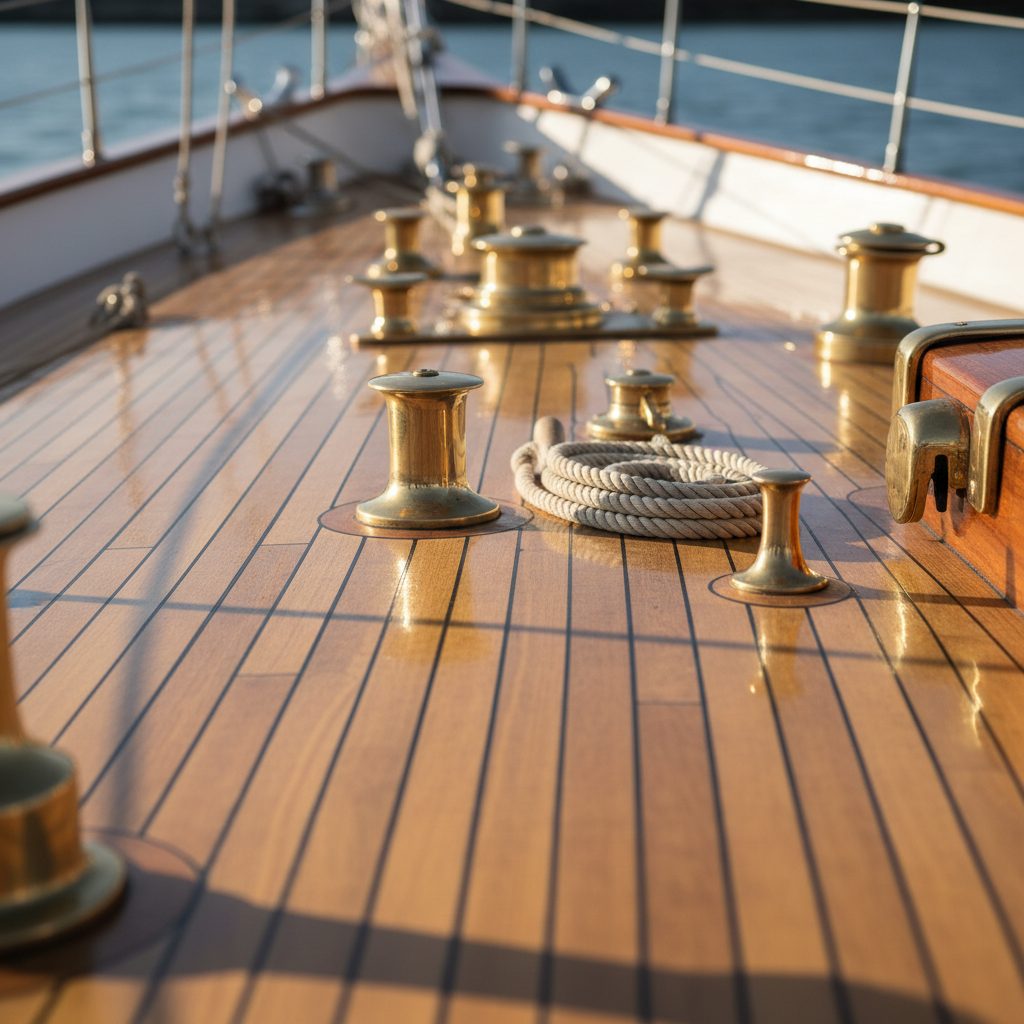
The combined effect is that a hull that would oxidize visibly in three years in San Diego will oxidize in eighteen months in Miami. A teak deck that goes silver in five years in Maine will go silver in two and a half on the Intracoastal. Stainless that pits in seven years on the East Coast pits in three in the Keys.
None of this is a surprise, and all of it is manageable with a consistent maintenance cadence.
The detailing cadence
For a yacht slipped in South Florida year round, our team recommends the following cadence at a minimum:
- Weekly: Fresh water wash down, chamois dry, salt removal from stainless, deck hardware, and isinglass.
- Monthly: Full exterior wash with marine soap, spot polish of any oxidation, stainless treatment, teak rinse with salt remover.
- Quarterly: Hull compound and polish on visible areas, gelcoat sealant, stainless polish on all rails and hardware, isinglass treatment, teak care depending on finish.
- Annual: Full multi-step compound, polish, and ceramic sealant on the entire hull, deep teak care, bottom paint inspection, anode replacement.
An owner who runs this calendar protects the boat's appearance and its resale value. An owner who skips quarters and tries to make it up at the annual is paying more to recover lost ground than they saved by skipping.
Compounding, polishing, sealing: what the words actually mean
The vocabulary matters because owners are routinely overcharged for one when they needed the other.
Compounding is an aggressive abrasive step that removes oxidized gelcoat, dock rash, and surface scratches. It cuts material off the hull. A boat can only be compounded so many times in its life before the gelcoat runs out and you are looking at paint or wrap.
Polishing is a finer abrasive step that removes the haze left by compounding and restores gloss. It also takes off a small amount of material, but much less than compound.
Sealing is a non-abrasive protective layer. Carnauba wax is the traditional choice and lasts six to eight weeks in South Florida. Polymer sealants last three to four months. Ceramic coatings last twelve to twenty four months but require professional application and proper surface preparation.
A boat that gets compounded every three months is a boat being prematurely worn out. A boat that gets sealed every three months is being maintained correctly.
Stainless, teak, and brightwork
Stainless steel in South Florida pits and rust-stains within months of skipping treatment. The cause is almost never the steel itself. It is salt deposition combined with iron particles in the air from the dock. The fix is a stainless treatment product applied monthly and a citric acid rinse quarterly. Stainless that has been pitted cannot be fully recovered short of replacement.
Teak care depends on finish choice. Oiled teak requires monthly attention and goes through cycles of looking beautiful and looking neglected. Sealed teak with a high build varnish lasts longer between attention but requires full strip and re-coat every two to three years. Bleached natural teak is the simplest, requires only a weekly fresh water rinse and an annual light sanding, and most modern yacht buyers prefer it.
Brightwork, meaning varnished wood trim, is the single highest maintenance cosmetic element on a yacht. Owners who want their brightwork to look good year round in Florida need a varnish refresh every six months. The alternative is staining, which lasts eighteen months but never looks as good.
Interior care
The interior accumulates the same salt and humidity damage as the exterior, but invisibly. Leather seating dries and cracks if it is not conditioned quarterly. Headliner fabric absorbs cooking and engine exhaust odours and needs deep cleaning annually. Carpets and rugs hold humidity and grow mildew if the AC is left off for more than a week in summer. Cabinetry hardware tarnishes.
A managed interior care program is half the cost of an exterior program and twice as easy to skip. Owners who skip it discover at resale that the interior looks ten years older than the exterior, and the buyer's broker reads that gap correctly.
When detail becomes refit
There is a point at which a boat has been neglected long enough that detailing cannot recover it. Heavy oxidation that has cut into the gelcoat below the polish layer, teak that has been ignored to the point of plank replacement, isinglass that has yellowed beyond restoration, deck non-skid that has worn through. At that point the conversation is no longer with a detailer. It is with a refit yard.
The cost gap between an annual detail program and a refit is roughly twenty to one. Owners who maintain the cadence rarely cross into refit territory until the boat is fifteen plus years old. Owners who do not, cross over within five.
We take care of vessels for owners who would rather not think about any of this. The calendar runs in the background. The boat looks the way it should every time the owner steps aboard.